How a Bar-Stool Application Led to Leading Trail Crews in the High Caucasus
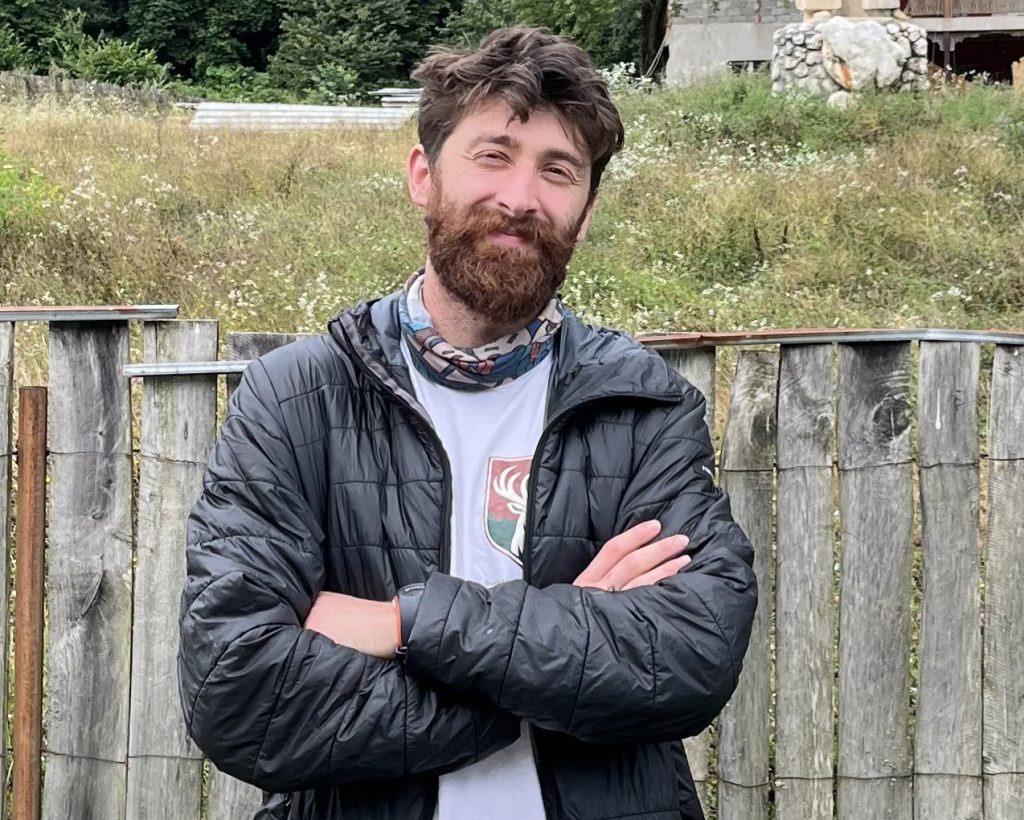
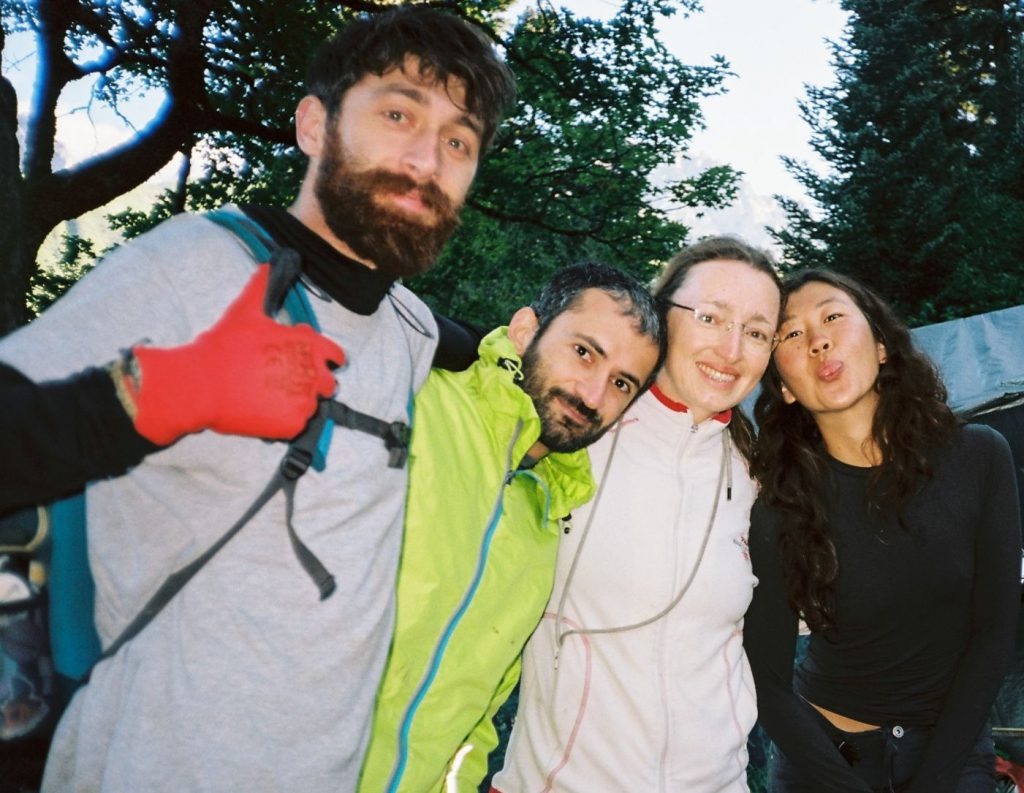
TCT crew leader Giorgi Diasamidze had only just discovered hiking when a chance conversation led him to volunteer with the Transcaucasian Trail in Zeskho, a remote valley in Lower Svaneti, Georgia, in 2022. He’s been coming back ever since, leading trail crews in Georgia and Azerbaijan, and leading two TCT Georgia’s International Volunteer Program (IVP) groups this past season. Known around camp as “Adjara” after his home region, he now also runs environmental projects and leads the Sairme Eco School, work he credits to his time on the TCT. TCT Georgia’s Rima Beridze recently spoke with Giorgi about his journey from first-time volunteer to crew leader.
How did you first hear about TCT, and what was going on in your life when it first caught your attention? What made you sign up for that first session instead of just reading about it?
It started on Mount Khvamli. I’d only just taken up hiking, and I was chasing every excuse to get out of the city and into the mountains. On a hike, some friends mentioned they were about to go cut trail in the Zeskho Valley in Svaneti. I liked the idea immediately: instead of walking a path someone else had already made, I’d be building something with my own hands that would last for years. Back at the bar that night, I filled out the application without thinking twice. Four of us friends ended up in the same group of eight, and we headed to Zeskho together. It wasn’t just a work trip. It was one long, joyful adventure.
What’s something from those first days on trail you didn’t see coming?
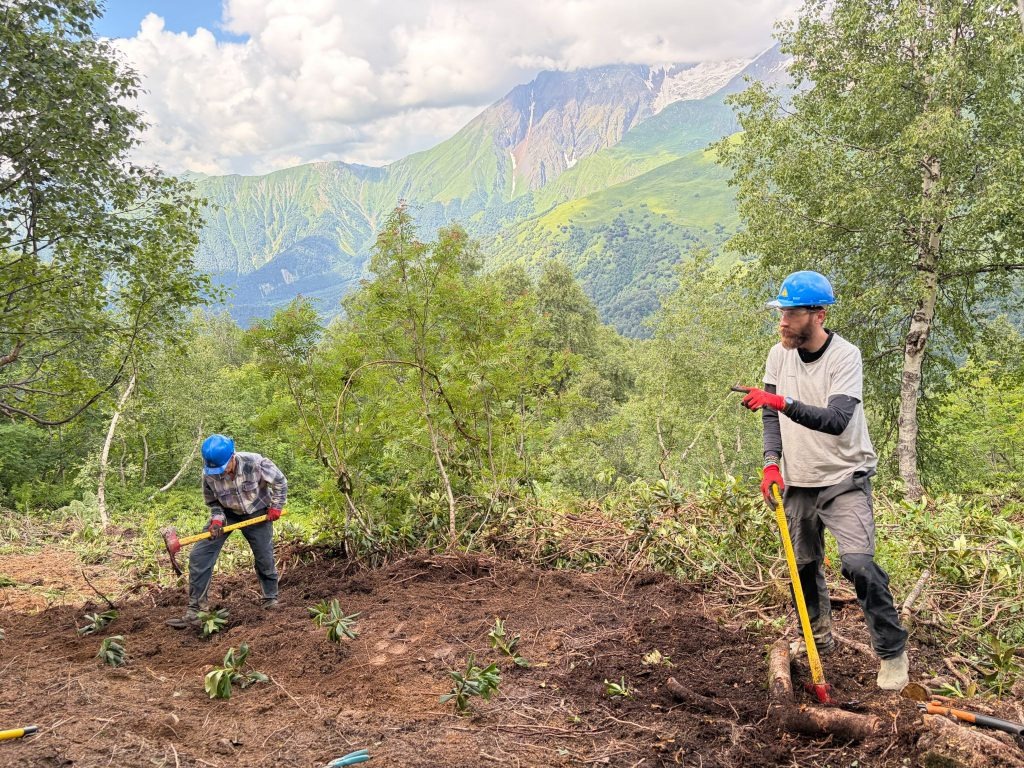
That trail building isn’t cutting grass and clearing branches. The first days came with a flood of technique and rules that threw me at first: the right slope for drainage, water channels, roots, safety. I didn’t expect it would take this much precision, knowledge, and hard physical work to build a trail properly. Now, when I go through the same rules with my own volunteers, I remember exactly how hard all of it was for me the first time.
Walk me through how you went from volunteer to crew leader. What did TCT’s leadership training actually cover?
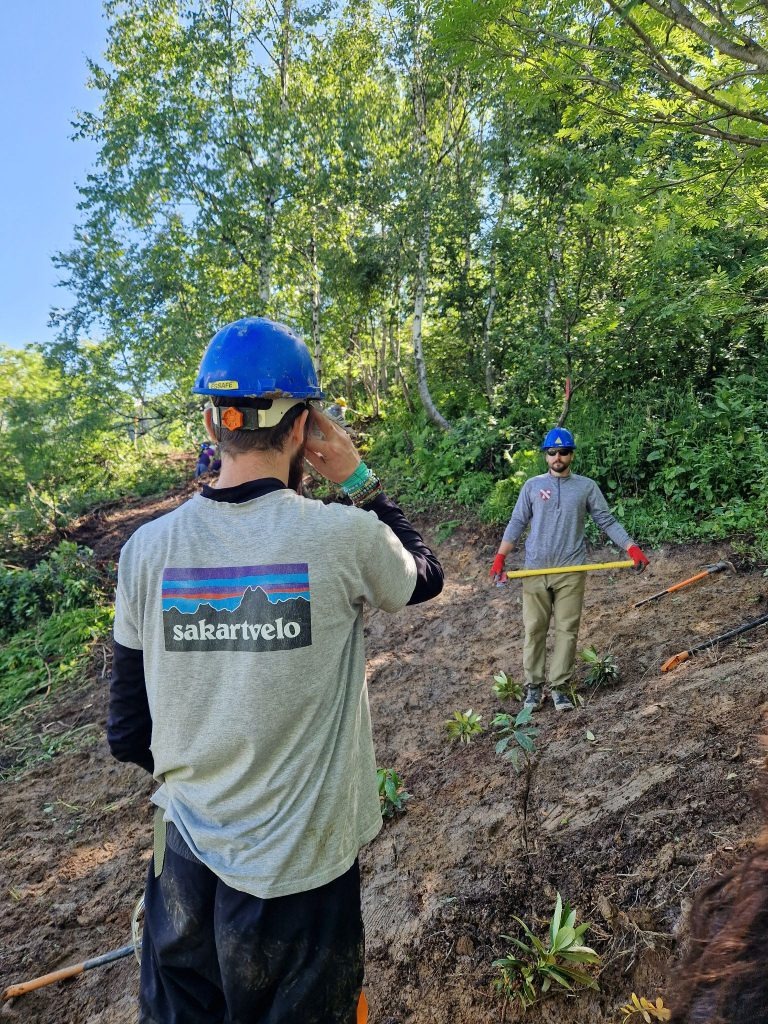
By the last day of my first week in Zeskho, I already knew I’d be coming back to that valley. I’d formed a connection to the place I couldn’t quite explain. I asked my leader at the time, Eka, directly how I could be useful and how I might become a leader myself. She told me about the Caucasus Conservation Corps (CCC), TCT’s program for training young people in trail skills and cross-border leadership. I waited for the application to open for a full year, and filled it in the moment it did.
The training put me in a room with people who are still some of my closest friends today. We covered advanced trail-building technique, group psychology and management, and Wilderness First Aid (WFA). It grew me personally as much as professionally. Since then I’ve led crews in the wild mountains of both Georgia and Azerbaijan.
What does a typical day look like for you now, from waking up in Zeskho to the end of the work shift?
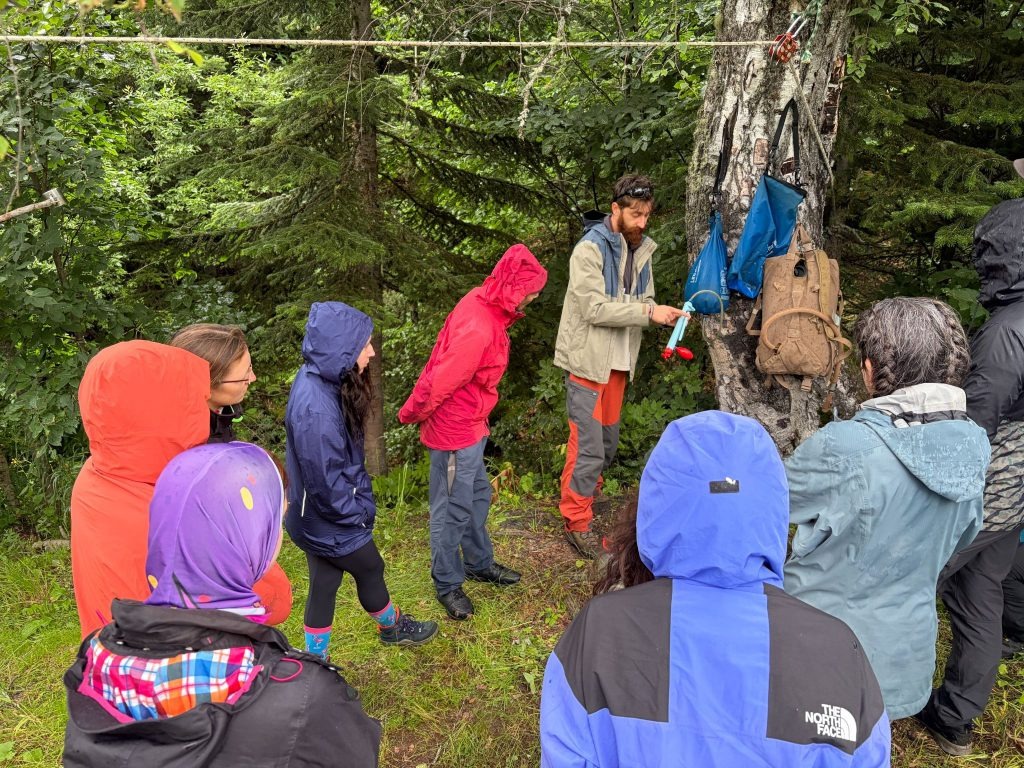
My day basically starts at night. I’m up by 6am. Climbing out of a warm sleeping bag into sharp, cold air is never easy, but the biggest push is Tsurungali, the peak above camp, catching the first gold light of morning. After that it’s a rhythm: a good breakfast, a safety circle, the plan for the day, then out to the trail. On site, the job is managing time, splitting people up well, and knowing when to call a rest. Lunch with that view is one of the best parts of the day. We finish work by 4pm and head back to camp, where we have a couple hours of free time. If the sun’s out, we take a dip into the ice-cold Zeskho river. Dinner’s at 7pm, then a fire and talk that runs into the night. Staying fully present for the whole day is emotionally tiring. It’s also the exact responsibility that makes the job worth it.
What’s the hardest part of the role that people don’t usually ask about?
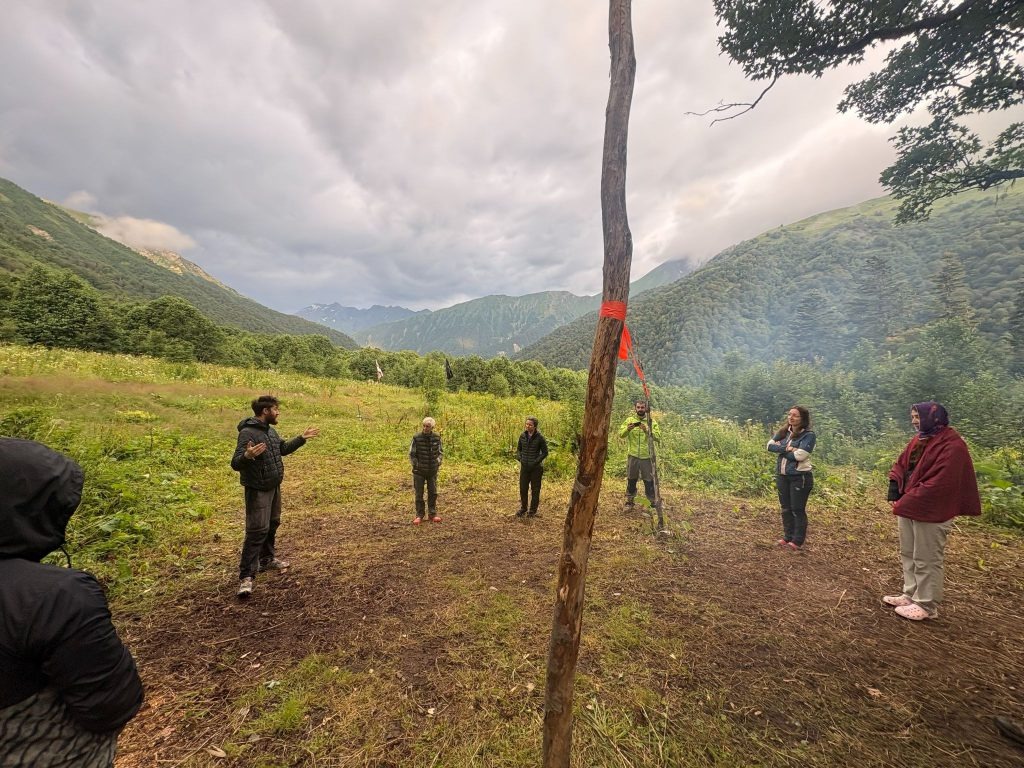
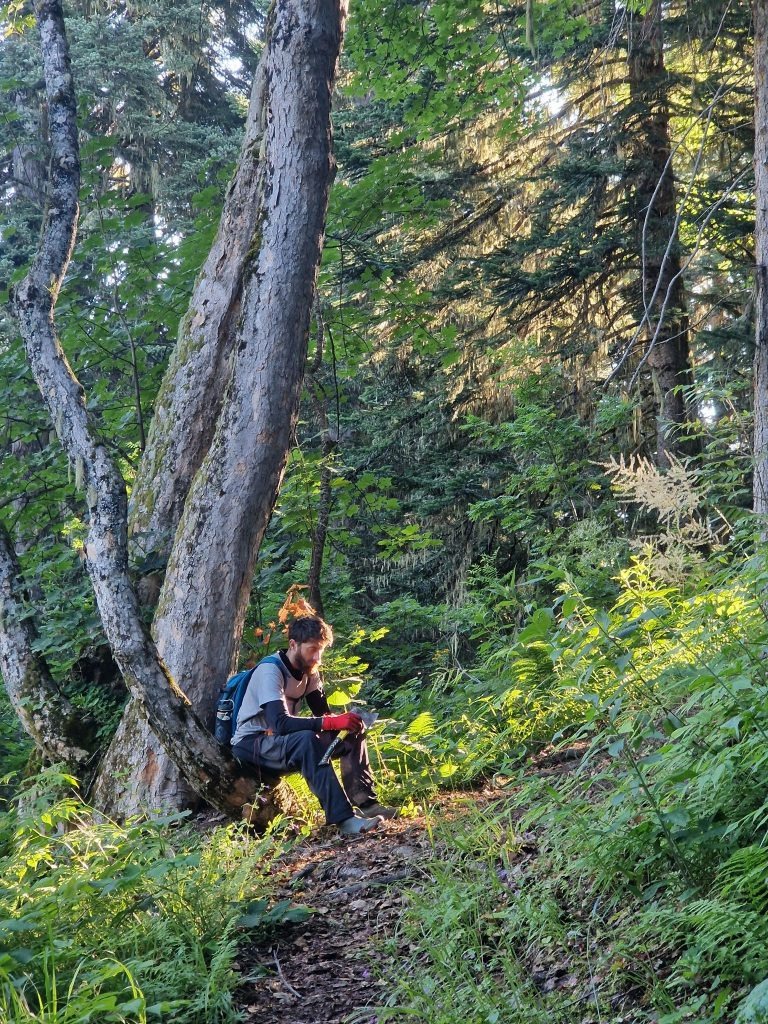
Staying 100% present, all day, every day. Zeskho is a place unlike anywhere else, and it’s the kind of place that makes you want time alone with it too. That’s hard to balance, though I still find moments to step back and just take the place in. Everything else is routine, and the good kind of responsibility.
You led both Group 1 (August 7–16) and Group 3 (August 21–30). What changed between the two? In the groups, in the trail work, or in you as a leader?
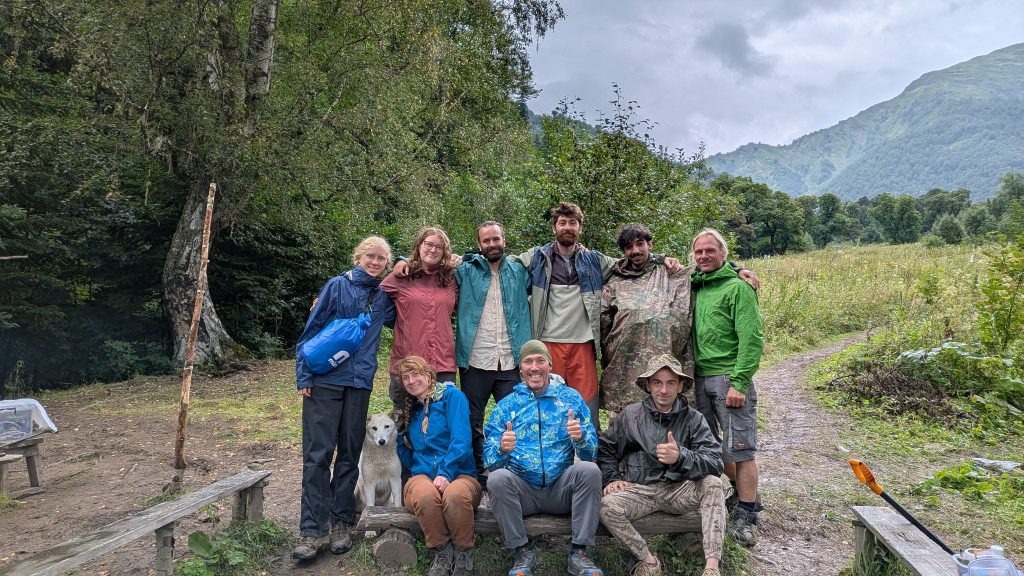
I got lucky twice. Both groups were full of motivated people. Group 1 had a different energy because I was rested and coming back to a valley I’d been missing, and that mood carried over to the whole team. There’s something fitting in it too: we built the camp with Group 1, and we closed the season and took the camp down with Group 3. By Group 3 I was really tired, but the volunteers’ drive and fresh energy brought me back. Rain slowed us down more than once. The mountain runs on its own rules, and the only real option is to adapt. We used every dry minute we got. We started calling ourselves the “Zeskho warriors,” half as a joke. A lot of the group wrote poems, rap verses, and sketches about those days, and the whole time we had a four-legged guard watching over camp: Tolia, the dog.
Is there a person from either group whose story or progress stuck with you?
One of my rules as a crew leader is to spend equal time with every single volunteer, so I end up watching almost everyone’s growth on the trail. What I love most is that each of them walked away with something new added to their life. It’s hard to single one out. Everyone had their own story, and together, we were the Zeskho warriors.
What’s the one thing a new volunteer on your crew should hear on day one?
I tell everyone the same thing: collect as many good memories as you can. This isn’t just a trail-building project. It’s a camp where we grow, learn, and develop, every single day. That’s exactly why I love the Zeskho camp. There’s an atmosphere here that gets to everyone. So just have a good time, cut a new stretch of trail, and let yourself enjoy what makes Zeskho what it is.
Where do you want this to take you, personally, over the next few years?
TCT completely reshaped what I’m interested in. It brought me a lot closer to the mountains, and it redirected me toward working with nature and studying biodiversity as a real path forward. The fact that I now run environmental projects and lead the Sairme Eco School is a direct result of the work on these trails. It’s what made me see, clearly, how much my own country needs projects like this.
Is there a section of trail, or a part of the work, you haven’t touched yet but want to try?
I think I’ve been through and studied every stage of planning and building a trail by now. What I want next is to see TCT’s trail-building work take off in my home region, Adjara. Everyone in camp knew me by my nickname, “Adjara.” Bringing a project this size to my own region would be double the motivation for me.
What would you tell someone standing exactly where Giorgi was two years ago, before he’d picked up a tool on this trail for the first time?
My rule is simple: better to try and regret it than never try at all. It’s completely normal to go to Zeskho and realize it’s not for you, or the opposite, to fall for it and never really leave. What matters is taking the step, because whatever happens, this camp, these people, and this wild place will leave you with something new, something clean, something worth having.